Odysseus in Tāmaki Makaurau: a Talk with Jack Ross about Homer, Seances, Magic, Colonialism & Printers' Mistakes

Updated: Jul 29
Scott Hamilton
Christopher Nolan is making a big-budget movie out of the Odyssey, and some of his reported casting choices—his decision to cast a black woman as Helen of Troy, for example—have upset some self-proclaimed defenders of Homer's work.
But the Odyssey is a story that has been retold many times, in many places. The great Tongan educator Futa Helu said that 'the ocean of humanity is fed by the cultures of many rivers', and wily Ulysses has sailed through many cultures. He was at home in James Joyce's boozy Dublin, in the lecture room of Futa Helu's tropical university of 'Atenisi, and in the wintry Murihiku of the young James K Baxter's poems.
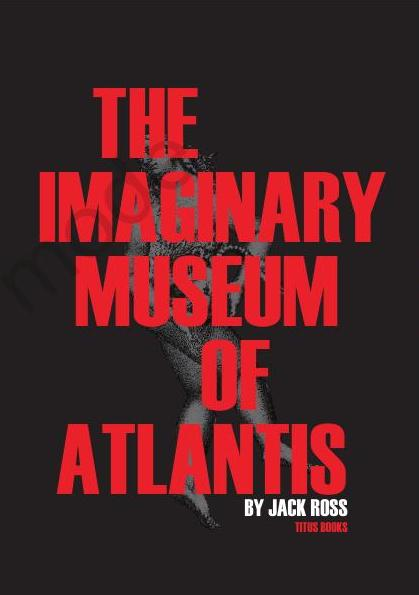
This is one of a series of interviews I'm doing with Jack Ross, a long-time lecturer in English at Massey University's Albany campus and one of New Zealand's literature's most persistent innovators. Ross will be opening his toolbox, and showing how he has given a long series of books their strange shapes and sounds. In this interview I've asked Ross about The Imaginary Museum of Atlantis, a novel that brings Odysseus to Tāmaki Makaurau's wild west coast.
SH: Kia ora, Jack. In The Imaginary Museum of Atlantis a man is washed up by the waves of Auckland/Tāmaki's west coast, and finds refuge in the nearby cottage of a woman named Annie. He can remember nothing about his life before he came out of the sea and he knows nothing about the place where he has landed. He starts a notebook to try to remember, and he ransacks Annie's bookshelves to try to learn about his new home. But, rather like the self-directed researchers who wind up as conspiracy theorists, he reads too quickly and interprets what he reads wrongly. He starts to believe he has arrived in Atlantis, and mistakes the books he skims as accounts of that place. His notebook becomes a weird mixture of quotes from his reading and wild, spontaneous writing. I'm fascinated by the way you bring two innovative but utterly different modes of writing together: automatic writing, which the Surrealists promoted and practiced, and the dry, detailed prose of encyclopedists that the likes of Jorge Luis Borges and Umberto Eco have made into playful fiction. Neither of these two types of writing has had much influence on the literatures of Aotearoa New Zealand. When you wrote the novel did you feel that, like your protagonist, you were going into unknown territory?
JR: Well, it’s interesting to think about the nature of that “unknown territory.” When I wrote my earlier novel Nights with Giordano Bruno, it was after abandoning an earlier novel which had gone through a number of drafts, none of them very satisfactory. I thank my lucky stars that none of the publishers I sent it to were fooled by it! One of them commented that he found the writing “undistinguished.” That put me on my mettle, so I immediately pulled out all the stylistic stops possible in the next piece of prose I wrote, which eventually turned out to be the first section of Bruno. The rest of the process, painful and perplexing though it was at times, was a huge relief from the quagmire of that first novel. For the first time I felt that I was actually doing what I was supposed to be doing.
After Bruno I wrote another novel. You’ve never seen it. Nobody has except a few friends and family members all of whom told me tactfully—or not so tactfully—that it ‘wouldn’t do.’ One section of it eventually—with considerable revisions—became the standalone novella Trouble in Mind, one of the first publications of Brett Cross’s Titus Books imprint.
So the fact that Atlantis didn’t come out until six years after Bruno is no accident. I felt doubtful about every aspect of it till virtually the last minute. I arranged the accreting material every which way—as a series of linked texts, as a single flow-through narrative, then as what it is now: a book whose pages run in two different directions, front-to-back. There was a series of Sci-fi “Ace double” publications which came out in the early 1960s. You can read a Philip K. Dick or Ursula Le Guin story on one side of the book, then you turn it over and find another complete story from somebody else. But that’s comparatively simple compared with the challenge of running the “back-to-front” thing all through the book.

I was sure that no-one would be able to follow a narrative like that. Even the printers didn’t really get it. The first print-run had to be pulped because they’d mixed up the order of the pages partway through. By then I was convinced the whole thing was madness. But some people seemed to be reading it, and they appeared to understand it, too. Maybe my own judgement that it was just too austere and unupholstered a construct for any sane reader was too pessimistic.
I think it helped that the blurb prompted readers to select that story about the shipwrecked man and Annie’s bach in Titirangi as the “master-narrative” of the whole thing. I think otherwise they really would have been in rudderless waters.
Bruno was about insomnia—or, rather, that was the key concept around which it revolved. Atlantis is about amnesia. I had in mind the fugues some people experience when the tension of their lives explodes into crisis, and their whole mental organism shuts down on them as a result. I didn’t realise, then, that so many people I know and love would end up suffering from various types of dementia. I don’t think I could write such a book now, one which looks at it coldly as a phenomenon rather than a living, everyday reality. My thinking, then, was far more metaphorical than I would be able to make it today.
SH: The Surrealists offered some detailed guides to automatic writing. Some recommended intoxication, with hashish or opiates, as a prelude to creativity. Others tried to write when they were very tired, and had entered a state between wakefulness and sleep. Some recommended music as a way of turning off the superego and putting the subconscious in charge. I've talked to people who have found automatic writing impossible: as much as they try, they simply can't write without imposing control, without thinking about whether a word or phrase is appropriate or not, without imagining a structure, a narrative or argument, for the text they're producing. How did you manage to write automatically? Was it an easy or difficult thing to do? Did you get drunk or stoned first, or was there something else that helped?
JR: The point you made earlier about the combination in the book of Borgesian fantasies of the infinite encyclopaedia with surrealist notions of automatic writing as the royal road to the unconscious mind is very well put, I think. I have a strong predilection for both types of thinking, contradictory though they may seem at first glance.
I guess, for me, it’s largely in the Occultist realm that I see them coming together. The idea of the Akashic Tablets, common to Madame Blavatsky’s Theosophy and Rudolf Steiner’s Anthroposophy, a kind of proto-Apple Cloud which records everything which has ever been thought or experienced by any sentient being, provides the kind of precedent I had in mind for the cross-referenced lists my protagonist in Atlantis keeps on trying to compile.
I myself practiced automatic writing as an outgrowth of meditation. I didn’t censor the stuff my mind came up with it, but I did edit it. It is a novel, after all, not a confessional.
I find first thing in the morning is the best time for such activities. I don’t find stimulants much use, myself—nor, I suspect, do much writers. I think they’re more prone to turn off access to the unconscious mind than to promote it.
SH: Decades after André Breton advertised automatic writing in the Surrealist Manifesto William Burroughs and his comrade Brion Gysin popularised the 'cut up'. They cut pieces out of texts and mixed these fragments with other fragments. Burroughs used the technique heavily in '60s novels like The Soft Machine, and then more sparingly in later decades. It was picked up by a series of singer songwriters: John Lennon, Mick Jagger, David Bowie. Today there are several cut up programmes on the net, which are appealingly easy to use. You put a paragraph into a box, push the return button, and see the paragraph rearranged in sometimes surprising and sometimes boring ways. I've never succeeded in getting a successful piece of writing—a good stanza or paragraph—out of the cut up programme without heavily rewriting it, but sometimes the programme gives me something I would never have come up with on my own—some eerie phrase, or some weird juxtaposition of images. The Kiwi film maker and artist Paul Janman has likened Burroughs' cut up technique to the I Ching, saying that both can allow us to bypass the conscious mind and give us access to things we might otherwise have repressed. Paul argues, though, that Breton was wrong to fetishise automatic writing, and to insist that it should be published in a 'pure' state, without revision. When I read the automatic writing of poets like Breton and Desnos I find lines of incredible beauty, but also quite a lot that fails to move me. Did you revise the passages of automatic writing that appear in your novel? And what do you think of Paul's view of the automatic technique?
JR: I am interested in the I Ching, and I’m a great admirer of Philip K. Dick’s The Man in the High Castle, which he claimed was actually composed by the oracle, since he consulted it on every major plot point in the novel. I hadn’t really thought of it as associated with the cut-ups, though.
As I understand it—from the small amount I’ve read on the subject—Burroughs’ main idea in promoting this very arbitrary technique for assembling wordage was to bypass the controls exerted by conventional grammar and syntax, which were, in his view, seeded in us by aliens from outside our world. “Language is a virus from outer space,” in other words.
I don’t think that’s at all André Breton’s stance. Like all the surrealists, he wanted to free the unconscious mind from its trammels and open a way to communicate with the deeper regions of human personality. I suppose that they both want to evade the power systems that control us through language, and see hypnotic or jumbled-up writing as a kind of cryptogram which might allow us to duck out from under them momentarily.
I’d see what I was doing with it in the novel as closer to Philip K. Dick than either Breton or Burroughs. There’s a zealotry about both of them which I find a little unconvincing. On a literary, and possibly even a philosophical level, I see Burroughs as a more rewarding writer than Breton, but I’m more interested in copying the tone of their deliberately jumbled texts for my own purposes than in deciding which of them was “right.” It’s not that there aren’t deeper themes behind the jumbled texts in Atlantis, it’s just that they’re not very close to the kinds of ideas that animate Breton and Burroughs.
SH: Although not many of our scribblers have explored automatic writing, the technique was quite widely used by occultists—I use the term neutrally, not pejoratively—in early 20th century Aotearoa. Like WB Yeats, many of those involved in our Spiritualist movement, which exploded in popularity between the two world wars, believed that the living could take dictation from the dead. You have a longstanding interest in our occult history. Was it a literary influence as well as something you studied?
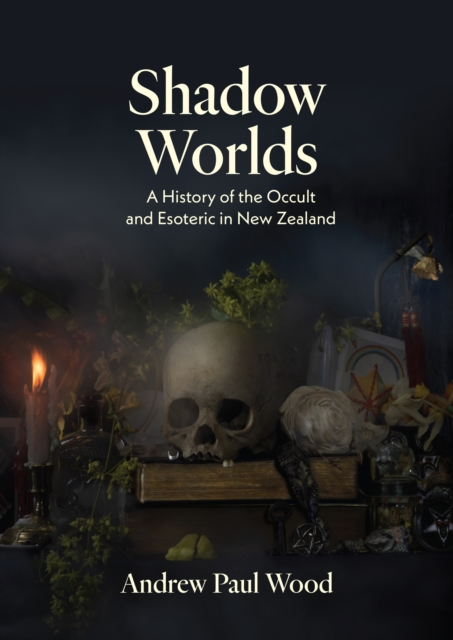
JR: I recently reviewed a book called Shadow Worlds, by Andrew Paul Wood, which provides a history of the “occult and esoteric” in New Zealand. It gives an extremely useful overview of just how intertwined occultist thinking was with the lives of everyday people a hundred or so years ago. Ever since the Fox sisters started the Spiritualist ball rolling in 1848, it’s been spreading out around the world and penetrating into scientific as well as eschatological thinking.
Brenda Maddox’s very amusing book George’s Ghosts points out the interesting fact that virtually every previous commentator on W. B. Yeats’s seances with his wife ended up discussing the communications from her “informants” as if they actually came from discarnate spirits. Rather than assuming them to be spurious, as a good rationalist is expected to do, they’d taken the opposite tack and treated them as if they were real.
Maddox points out that the spirits’ preoccupation with whether or not Yeats was wearing his nice new woolly socks to keep his feet warm, and eating enough at mealtimes, sound more like the worries of an attentive partner than of a set of ancient intelligences anxious to explain the underpinnings of the universe.
She points out, too, that most writers on the subject take for granted that a mere girl could never have come up with such lofty notions on her own, and that therefore they must have come from “beyond.” That’s a very common theme in books on the occult. Most of the mediums are women, but it’s assumed that they must be mere conduits for more lofty (male) intelligences. Actually churning out clap-trap is an equal opportunities profession. George Yeats was at least as well read as her husband on such matters, and she could spin it out by the yard.
The fact that I myself am very interested in occult matters doesn’t mean that I think it’s useful to be credulous. On the contrary, you have to be as sceptical as possible in order to get any closer to actual knowledge of the subject. Whether there are ghosts or not, whether or not the human personality can survive death, are questions as difficult to answer now as they were in the heyday of the Society for Psychical Research. I am, in many ways, as interested in the whole business from the point of view of social history as I am in the actual substance of such inquiries.
I wouldn’t say I “studied” it exactly—it was more an amateur obsession than that—but it’s certainly a real as well as a literary predilection of mine.

SH: Arthur Conan Doyle visited this country to give a series of lectures on spiritualism after the first World War; large crowds turned out for him. He made a pilgrimage to the Turnbull library, to see the manuscript of Frederick Maning's Old New Zealand. Doyle attached great importance to Maning's report of a seance-like ritual held by a group of Maori friends and acquaintances in the north. Although Maning was sceptical about the supernatural, he found some of the details of the 'seance' unnerving. Doyle thought Maning's account was proof that spiritualism was not merely a religious movement that began in 19th century Britain but an ancient, pan-cultural phenomenon. It's worth noting that doubts have been raised about the veracity of Maning's book, and about the level of his understanding of te ao Māori. Kendrick Smithyman argued that Old New Zealand should be considered this country's first novel. But it's certainly true that, across the Pacific, composers of literature have often felt that their work is aided by the dead. In some parts of Vanuatu songs are composed in forest clearings where great songwriters of the past have been buried. At twilight, when the boundary between the world of the living and the dead is porous, a composer in search of a song will go alone to these clearings and drink kava. In Kiribati traditional song writing is considered a sacred art, in which the songwriter connects to ancestors and receives musical messages. And some of the twentieth century proponents of automatic writing also believed there was a mystical aspect to the technique. Yeats, of course, published A Vision, a book that tries to explain the automatic writing produced by his wife, writing that he took as evidence for the existence of a spirit world. William Burroughs considered that the cut up opened access to a magical realm that science and rational discourse could not touch. So even if Doyle was wrong about the importance of Maning's memoir, it does seem fair to say that many writers in many different cultures have felt that something mystical was going on when they created. Do you think of what you're doing in this way?

JR: That’s very interesting about Conan Doyle and Maning. I didn’t know about that. I have read Old New Zealand, and I certainly see Kendrick’s point. Stylistically, it reads more like Tristram Shandy than a sobersided account of colonial life. I suppose there could be something of Melville’s Typee in there also—if not his even madder early novel Mardi, or a Voyage Thither.
I have to say that I’d taken it for granted that there was a mystical element to automatic writing. If it means anything at all, it’s surely that the practitioner believes that it offers a kind of access to certain regions and powers which are forbidden to the conscious mind?
Which is why I would probably have to see my own efforts in this line as aping the manner rather than the matter of automatic writing. My protagonist is doing it in order to jumpstart the inaccessible parts of his own memory. But, not suffering from amnesia myself, I don’t really need to do that.
In other words, it’s all an imposture—or a fiction—on my part. I’d withhold any judgements on whether people using automatic writing for their own spiritual fulfilment are “genuinely” in touch with the infinite, or entering mystical realms.
I’m pretty sure that I’m not, since that’s not my intention in writing that way, but of course I could be wrong. Conan Doyle was convinced that his friend Houdini had great psychic powers, which he exerted without knowing he was doing so. Whenever Houdini showed him how particular séance tricks were done, Conan Doyle would riposte that all it proved was that Houdini himself was being continually assisted by the spirits.
Maybe I too am touching on hidden realms of the mind in this novel about Atlantis. If so, I’m not really aware of it.
SH: You have had parallel careers as a scholar of literature and as a creative writer. Your academic writing is carefully argued, with footnotes that you show you know what you're talking about. But in your creative writing you've often played havoc with academic conventions, dropping outrageously false details into what seem on the surface like fastidious essays, juxtaposing pseudo-academic footnotes with pornographic images, and dangling conspiracy theories in front of readers, in what might be tests of their gullibility. Britain's JH Prynne is another writer who has bounced throughout his career between respectable academic texts and bold experiments with language. He said once that he enjoyed getting revenge on academia in his poetry. Do you feel the same way? Has it been hard moving between the two worlds?
JR: I do see the attraction of getting revenge on academia, but I don’t think I’d put it quite like that myself. I think universities can be very useful places, and that the freedom they offer to follow what seem—at first glance—rather unpromising lines of research is one of their greatest strengths.
But academia is also almost inseparable from megalomania. There are, in my view, many subjects which are better learned through experience or apprenticeship than by rigorous hermeneutical analysis. But once you have learned journals in every field, with eager, competitive careerists churning out articles, it’s already too late. Nobody wants to see their own field of study abolished—so taking a caustic view of the overreach of the academic machine is a forbidden act.
Hence, I think, the tendency to write satirically about the excesses of such institutions. The absurdity of so many academic conventions—the endless footnoting, the latinate, jargon-ridden prose—cry out for parody. “The truest poetry is the most feigning” – and the best attitude towards academia is, I think, to have your tongue firmly lodged in your cheek.
Brett Cross did me a bit of a favour there. When I first sent him Atlantis to look at, he asked me how many of the citations were real, and whether they came from copyrighted books. I told him that fair-use quotation was an accepted right for scholars, but he reminded me that that applied to articles and reviews, not fiction. He certainly wasn’t going to risk prosecution over some poxy quote from a popular book on amnesia.
I had to admit he had a point, so I went through the book systematically identifying which cited texts were still in copyright and which ones weren’t. And then I rewrote and disguised all the ones—far fewer than you’d think—over which there could be any question.
It was a bit onerous at first, but after a while I started to enjoy it. I could now sharpen and spice up the quotes, initially to disguise their origins, but later to tease out particular themes. It added a whole new dimension to the book, and the sheer amount of lying required ended up being very refreshing for someone trained to dot every i and cross every t by my academic masters.
For me, that’s when the book finally became an actual novel, rather than a curious exercise in Benjaminian quotation.
SH: In a 2021 interview you commented on the amnesia that the hero or anti-hero of your novel suffers. You talked about the way Aotearoa New Zealand has sometimes seemed to offer a clean slate to migrants who arrive here, a blank canvas to work on, but how things are never that simple, that history is never really absent for either a place or an individual. Your comments made me think about a sonnet Allen Curnow wrote eighty or so years ago called 'Polynesia', where he said that 'Surf is a partial deafness' all 'islanders suffer from'. The poem presents the Polynesian settlers of Aotearoa and by implication the Pākehā who followed them centuries later as disconnecting themselves from their old habitats and habits, and acquiring a 'deafness', a sort of amnesia, here. 'Polynesia' is a beautiful poem, and the power of Curnow's verbal music almost carries me away. He wrote that poem in the '40s, when he was developing his view of this country as a place 'not in narrow seas': a place defined by distance, by remoteness, a 'small room with large windows'. And yet I think that view of Aotearoa New Zealand as a tabula rasa had a deleterious effect on some of the historians of Curnow's generation. The problems of seeing Māori culture and history as disconnected from those of wider Polynesia are so obvious they don't need restating in 2026, but I think we still underestimate the importance of what I'd call the prehistory of the Pākehā people in the Old Country, the European Hawai'iki of Britain. The trouble, I think, is that the 'deafness', the amnesia, that Curnow talks about wasn't something natural, something imposed by geography, but rather a conscious effort to hide a trauma. Rollo Arnold came from the same generation as Curnow, and he was something of a voice in the wilderness when he published The Farthest Promised Land, a book that studied the huge wave of migrants that arrived here in the 1870s with the help of the settler government, a wave that changed the demographics of the country decisively, reinforcing the military defeats of Māori in the 1860s and early '70s. Arnold showed that many of these migrants were poor farm workers who had been part of the 'Revolt of the Fields' back in Britain. They'd joined the rural trade union movement started by Joseph Arch, and fought for better wages and against the evictions of tenant farmers, and more than a few had been punished with unemployment and places on the blacklists of 'troublemakers' compiled by employers and landlords.
As the rural workers had suffered defeat after defeat, and work had gotten harder and harder to find, Arch had begun to urge his unemployed followers to migrate to 'new' lands like Canada and New Zealand. He'd even collaborated with recruiters sent by the New Zealand government, helping them make their case. He's a sort of forgotten Moses of the Pākehā people, waving the ancestors of hundreds of thousands of us off to a promised land. And once here they were able in many cases to transform their social status, to become prosperous farmers on cheap confiscated land. They buried their old identities very quickly—not just their identities as rural trade unionists, opponents of the state and of employers, but the rich regional identities they had inherited from their ancestors in counties like Lincolnshire or Essex or Cornwall. William Pember Reeves argued that Britain was a sort of Platonic ideal that only came to exist in this country: it was only here that the families and accents of people from different corners of the old country fused, as Cornish migrants married migrants from the Shetlands, and migrants from Yorkshire came to speak in the same way as those from Wales. In place of the old regional diversity we saw a sort of fervent but abstract nationalism: a veneration of symbols like the Union Jack and the monarchy. It's only in the last decade that we've had a series of books that take up Arnold's themes, like Andrew Shaw's The Unsettled. I've rambled on badly here; I should shut up. How much truth do you think there is in the idea that these islands were a tabula rasa for Pākehā?
JR: Well, this is really the crux of the matter, isn’t it? Your question is really more of a mini-essay, but I do see the importance of substantiating and fleshing out what it is you’re getting at. It’s too easy to dismiss these matters with a few glib generalisations. In particular, your point that “the 'deafness', the amnesia, that Curnow talks about wasn't something natural, something imposed by geography, but rather a conscious effort to hide a trauma” puts it very well, I think.
My father used to comment on the irony of growing up here in New Zealand with so vivid a sense of “home”—in his parents’ case, various parts of the Scottish highlands—that for quite a long time it seemed far more real to him that the actual landscapes of Northland around him. He was born in Rawene, on the Hokianga harbour, but all my grandparents’ conversation was about Achiltibuie and the Summer Isles off the West Coast of Scotland. He was also well aware that it was the Scots, with their deep sense of grievance against the English for the Highland Clearances and various other acts of oppression down the centuries, who enforced not dissimilar colonial policies on the inhabitants of every country they settled in.
The ‘trauma’, in that sense, was repeatedly reenacted in each new place in the perverse hope of erasing the original abasement and humiliation by dealing it out in your turn and thus demonstrating mastery over it. Just an abused child is at great risk of growing up to be an abuser, or one who accepts abuse as normal, so the people who came out here to New Zealand tried to reinvent themselves as winners. And of course that required a new set of untermenschen to bully.
Curnow himself was a notorious literary bully. I remember seeing the minutes of the meeting of the NZ Literary Fund where he explained that there was no need for Louis Johnson’s New Zealand Poetry Yearbook to exist, let alone be supported financially. There was already one literary magazine in NZ, Landfall, and since all the good poets appeared there, only sloppy bad poems would be available for Johnson to print.
Provincial hubris. Parish pump politics. I guess what I was trying to say in Atlantis was that you can imagine the place you’re in any way you want to. But to maintain the illusion requires a periodic brain wipe, and an attempt to pretend that the rest of the cosmos doesn’t exist. Curnow’s myth of himself as New Zealand’s great poet required him to put up a fence against outside influences, but also to scale the place down to fit his own peculiar eschatological concerns.
The astonishing banality of our visions of Oceania, given the breathtaking beauty and richness of the place, can easily be improved on by any reader of pulp magazines and UFO tales. So, yes, Atlantis is a kind of satire—a revisiting of some of the themes of Erewhon, I guess, though I wasn’t really thinking of that at the time.
I just liked the idea of turning our twin harbours, the Waitematā and the Manukau, into two of the five rings (three of water, two of land) which Plato described as surrounding Atlantis. Perhaps the third ring was the Kaipara. Why not? Everyone else has made their claim, from Sweden to Antarctica. If all this strikes a chord with anyone else, then I’ve succeeded. If not, then better luck next time, I guess.
*
I’m sorry. I just can’t resist putting in one last anecdote. I was once asked to give a lecture on how to write a novel to an audience of ‘General Arts’ students at Massey. I decided that the easiest way would be simply to discuss The Imaginary Museum of Atlantis as enacting the problem of how to dramatise a concept such as amnesia.
The talk seemed to go reasonably well, and one of the students who came up afterwards to discuss it said he thought that my book sounded most interesting, and that he’d very much like to see a copy. Well, I had my doubts, I must confess, but he seemed sincere, and—while I hadn’t exactly majored on some of the more extreme material included in the book, I hadn’t glossed over its existence, either. I mean, what’s likely to come up when you include so much (seeming) automatic writing in your text?
So I lent him a copy.
A couple of weeks later I ran into him on campus, and gave him a wave and a hello, as one does. He glared at me and hurried on past. Clearly it hadn’t been what he’d expected. You get that sometimes. Quite often, in fact. So the surprise for me is always when I meet someone who’s actually enjoyed the novel. It’s a bit like the Hogwarts sorting hat, I suppose: separating the sheep from the goats. I take it the former are those lucky souls who are perfectly content with things as they are, and can’t understand why trendy lefty woke-ists such as us are constantly trying to dig up dirt and reveal all the sins of the past as a preliminary to a comprehensive critique of the present.
_


This is very interesting. I recall when Bruno was launched. I was there. Don Smith liked it but the 'postmodern' add-on he dismissed. Then Atlantis arose (for me Plato is a problem, I don't like (although I qualify this later here) the focus people make with Atlantis and his dubious dialogues of Plato (and yet another part of me likes the dialogues!) -- which I still think paradoxically are fascinating in their illustration of Plato-Socratic dialogue, but not the endless explications of the universe made of triangles etc and then ultimately that speech is more vital etc etc -- all that (speech-writing) is taken to task by Derrida. But his Cave Analogy is good and the sum of his works…