George Steiner & Aotearoa

Updated: Sep 25
Scott Hamilton
Opinion polls suggest that many young Jewish people living outside Israel have abandoned Zionism. In the United States, for example, a poll found that most Jews under the age of forty did not support the behaviour of the Netanyahu government, and that a substantial minority no longer considered Israel central to Jewish identity.
Here in Tāmaki Makaurau I've watched with admiration as large numbers of Jews, most of them younger people, have marched on Queen Street behind banners denouncing the war on Gaza.
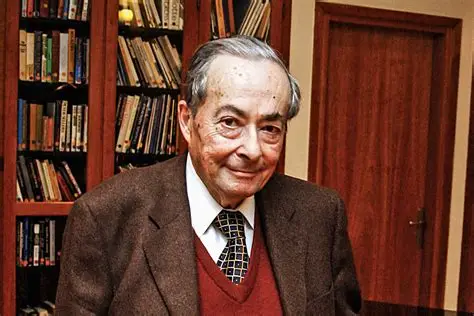
George Steiner's work offers young Jews a post-Zionist way of being Jewish. Steiner's work is also very relevant to Pākehā Aotearoans rethinking their identity.
Steiner might seem an odd man to talk about in a political context. He probably never marched down a street. He was a scholar who spent much of his life in libraries, lecture rooms, and his study. He wrote with grace and power about literature, history, philosophy, and myth. He was not a religious man, but his frequent seclusion and his dedication to exegesis link him to centuries of Talmudic scholars.
But Steiner's unworldliness does not mean he didn't have some important things to say about the world. Many critiques of Zionism focus, understandably, on the consequences of the founding of Israel—the displacement of other peoples, the wars, and the slide toward fascism. Steiner's critique of Zionism, though, is internal rather external. He sees Zionism as anti-Jewish.
Steiner reconstructs and celebrates the astonishing achievements—in the arts, in scholarship, in philosophy & theology, and in popular culture—of Jewish minority communities in Europe and elsewhere over thousands of years. Despite or because of their frequent marginalisation, Jewish communities gave humanity some of its greatest thinkers and creatives, and conjured a theology that adorned and enriched their everyday lives. Then came Zionism and Israel.
Steiner does not deny the enormous suffering, the centuries of pogroms and expulsions, that won converts to Zionism. But he argues that the movement coarsened, compromised, and in some cases even erased Jewish cultural achievements. Steiner points, for example, to the destruction of the Yiddish language. This tongue used by German and eastern European Jewish communities had given the world writers like Isaac Bashevis Singer & a huge body of song. But it was suppressed in Israel.
Use of the language was severely restricted in public places, and speakers risked being beaten up. The dead language of Hebrew was made Israel's official tongue. Many other features of diaspora culture were also repressed. Steiner felt that Israel turned its Jewish inhabitants, whose ancestors had for so long been oppressed, into oppressors, and that much of the culture they had evolved over centuries could not survive this change. Zionism required a radical narrowing of Judaism.
We see a similar narrowing in other nations where a codified religion has become the basis of state power. In the Taliban's Afghanistan, for example, a rich musical culture, developed by Muslims for centuries, has been proscribed. To be post-Zionist, then, means to break out of this narrowness, and to rediscover and explore Jewish traditions. Steiner's vision has much to teach Pākehā.
As Rollo Arnold shows in this classic book The Farthest Promised Land, many of the Pākehā who settled these islands were escaping poverty, persecution, and class conflict in the 'old country'. Using archives in the United Kingdom as well as this country, Arnold shows how, in the 1870s, New Zealand recruiters collaborated with trade union leaders to persuade rural workers to come to migrate to this 'promised land'. Those workers had staged a 'Revolt of the Fields', protesting against low prices and high rents with strikes and farm occupations. The state had arrested thousands of them, and employers had compiled blacklists. A 'new' country waited, where swathes of land had been confiscated and was awaiting occupation. Like many Zionists, the settlers of Aotearoa in the 1870s were refugees settling land taken from another people.

Just as Zionisn impoverished Judaism, so the new identity in NZ impoverished Pākehā culture. Local cultural traditions from the old homeland, often forged in adversity—folk songs, dances, story telling, festivals—were replaced by devotion to abstractions like the Union Jack & the Windsors. And because Pakeha identity was defined by skin colour and by a contrast to the 'uncivilised' cultures of Māori and other brown peoples, opportunities for cultural exchange and growth were limited.
A substantial minority of Pākehā have broken out of the old identity, which has been weakened over many decades by the Māori Renaissance and the decline of Britain. They're connecting with indigenous culture and with their own deep history. George Steiner could be an inspiration for them, as well as for Jews seeking a post-Zionist identity.
_


So, adding to my comment, which I know isn't clear regards the connection of the alteration of languages because of colonization of the 'colonizers' and that of the indigenous people. Obviously these are Maori here in NZ. Both Europeans immigrants and Maori facing (often devastating loss of land and even life) gain and lose in this complex historical transaction of process. Maori in NZ quite quickly learnt English and writing (In both Maori and English, Te Kooti wrote letters in English or Maori and was able to confuse those pursuing him, but also many Maori were able to challenge the Courts in regard to their rights and this led, from this early "word-battle", to changes in NZ Law (af…
An interesting introduction. I have read a number of books or essays by Steiner. I don't know his argument but it seems as said here that there is a break with the culture as it was (in this case in Europe), and indeed Jewish people contributed greatly to European culture. Nietzsche makes a point in his The Joyful Science (my translation!) of praising Jewish people. The culture was non-Christian I suppose and appealed to him. Anti-semitism etc caused the inception of Zionism in at least the 1880s. Not all Jewish people were convinced, including Steiner. Kafka was undecided, and Oliver Sach's family, who hosted Zionist meetings (as described in My Uncle Tungsten) but they themselves were not in favour o…